Reading in Spanish with Bilingual Kids: 5 Ways to Strengthen Reading Comprehension
In this post: Learn 5 easy ways to strengthen reading comprehension in Spanish with bilingual kids. Post contains affiliate links.
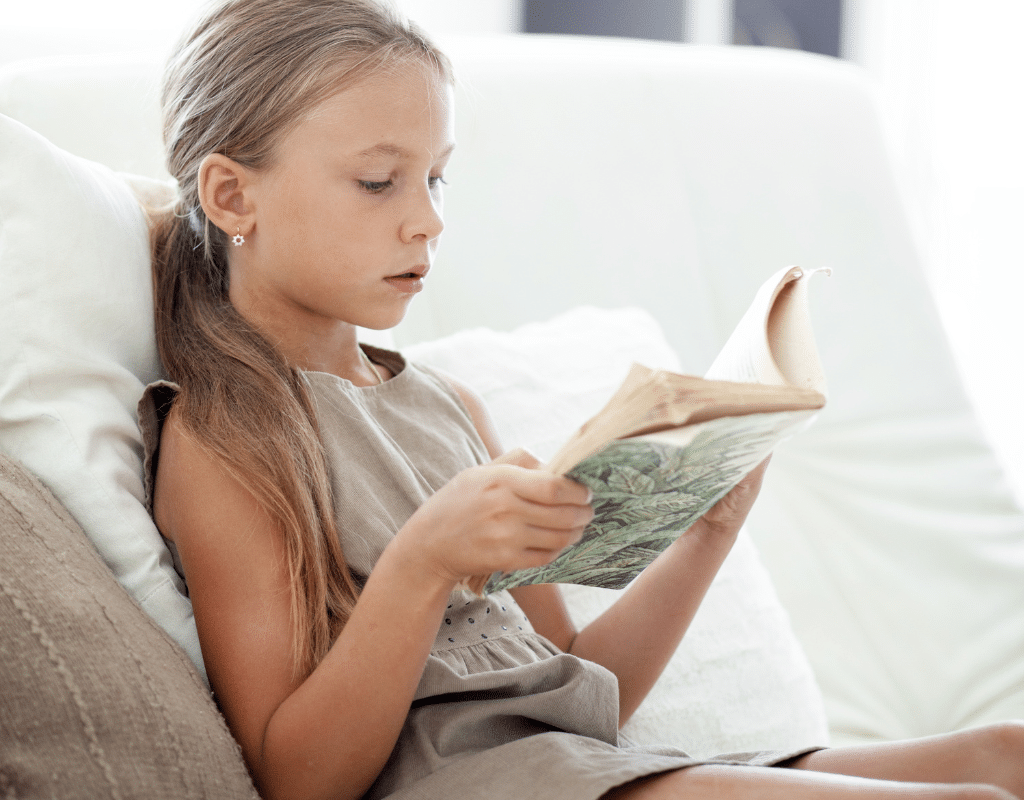
There’s a really sweet stage in bilingual parenting that I don’t think gets celebrated enough. It’s the moment when your child can finally read in Spanish on their own. They know their letter sounds. They can blend syllables smoothly. They start to actually enjoy picking up a book. Getting our kids to this point is a huge accomplishment.
But this is also where many parents start to wonder… now what? You might notice that your child can read the words on the page, but when you ask what happened, the answer feels vague. They hesitate. They give a surface-level summary. Or halfway through a page, their attention drifts and you can tell the story isn’t really sticking.
They can decode. But they’re still learning how to build reading comprehension in Spanish.
If you’ve noticed this, I want to reassure you that nothing has gone wrong. This is a completely normal part of learning to read. Decoding and comprehension are connected, but they’re not the same skill. One is about sounding out words correctly. The other is about building meaning from those words: holding details in memory, visualizing scenes, understanding cause and effect, and connecting ideas across sentences. That second layer simply takes more time.
And the good news is that there are very practical ways to strengthen Spanish reading comprehension at home without making reading feel heavy or overwhelming. That’s exactly what I’ll walk you through in this post!
Table of Contents
5 strategies to build reading comprehension in Spanish with kids
Now that we’ve named what’s happening during this stage, let’s talk about what you can actually do.
Here are five practical strategies and mindset shifts that can help strengthen Spanish reading comprehension at home with your bilingual kids. None of them are complicated. But together, they help children move from simply decoding words to truly understanding what they read.
1. Choose the right level for Spanish reading comprehension
This is where many parents accidentally move too fast.
A child may be able to sound out longer words or read a full chapter book, but that doesn’t automatically mean their Spanish reading comprehension is ready for it. You want to choose the level that matches their Spanish reading comprehension level, not their decoding level.
Look for texts that:
Have shorter paragraphs
Use familiar verbs
Repeat sentence structures
Follow predictable story arcs
When structure feels familiar, the brain doesn’t have to work as hard on decoding patterns. That frees up energy for meaning.
Reading in Spanish should feel slightly challenging, but not overwhelming. If frustration is rising, the text may simply be too dense right now.
2. Start with shorter passages than you think you need
One of the most common things I see when kids are new to reading in Spanish is what I think of as comprehension fatigue.
They start strong. The first few sentences go beautifully. But as the paragraph continues, their working memory fills up. They’re decoding, remembering vocabulary, processing grammar, and trying to hold the storyline all at once.
By the middle of the page, understanding starts to fade.
This isn’t a sign that your child isn’t ready. It’s simply a sign that comprehension takes more mental energy than decoding.
Instead of pushing through an entire page, try shortening the reading load. One paragraph at a time can be enough. Pause and ask them to retell what happened before moving on.
Shorter passages with full understanding build stronger readers than long passages that leave them drained.

3. Vary how they show comprehension
One of the easiest ways to make Spanish reading comprehension more engaging is to vary how your child shows understanding.
If comprehension building always looks like answering questions or writing summaries, it can start to feel heavy. Especially for younger kids who are still building stamina.
Instead, try changing the format. After reading in Spanish, you might ask your kids to:
Draw their favorite scene.
Build the story with blocks or magnetic tiles.
Act it out with stuffed animals.
Retell the story while walking outside.
Create a different ending.
Sequence events using simple picture cards.
When children move, draw, build, or play, they’re still practicing comprehension. They’re just doing it in a way that feels more natural and engaging.
Some children explain ideas better with their hands than with a pencil. And that still counts!
Spanish reading comprehension isn’t just about answering questions correctly. It’s about understanding, remembering, and making meaning.
Bringing variety into how they respond to reading keeps it fresh and helps prevent burnout (for both of you.)
4. Help them build mental pictures while they read
Strong readers don’t just move across words. They build scenes in their minds.
When children truly understand what they’re reading in Spanish, they can picture it. They can describe the setting. They can imagine the character’s expression. They can tell you what they think the room looked like or how the weather felt.
But this doesn’t always happen automatically. One of the most helpful things you can do if your child is struggling with this is model it.
Read a short section aloud yourself and then pause and say something like:
“When I read that, I pictured a small red house with trees all around it. I imagined it was early morning and still quiet” or “Cuando leí eso, me imaginé una casita roja rodeada de árboles. Me dio la impresión de que era temprano y todo estaba muy quieto.“
You’re showing them what readers actually do. You’re making the invisible thinking visible. This takes the pressure off of them to “get it right” and instead shows them how to interact with a story.
If they struggle to describe what they pictured, that’s simply information. It tells you they may need shorter passages or more support right now.
Visualization is one of the clearest signs that Spanish reading comprehension is strengthening. When the words turn into scenes, you know meaning is landing.
5. Prioritize meaning over perfect reading
It’s very easy, especially after putting in so much work with phonics, to focus on accuracy. Correcting every mispronounced word. Fixing every small mistake. Stopping frequently to make sure it sounds perfect.
But if correction constantly interrupts flow, comprehension can suffer. Reading in Spanish should not feel like a performance.
If your child misreads a small word but still understands what’s happening, it’s okay to let it go and keep moving. You can revisit patterns later. Comprehension and engagement are more important in this stage than flawless delivery.
Ask yourself: Are they following the storyline? Are they engaged?
Can they tell me what happened?
If the answer is yes, you’re building a strong foundation.
When children care about the story and understand it, accuracy improves naturally over time with practice and exposure.

Spanish reading comprehension resources for bilingual kids
If you’re looking for structured support during this stage, it’s always helpful to have reading materials that are intentionally designed for comprehension, not just decoding.
That’s exactly why I created my Spanish Reading Comprehension Level 1 workbook. The passages start short and gradually increase in length, with a strong focus on understanding what’s happening in the story rather than just sounding out words. The questions are designed to build retelling, sequencing, and deeper thinking skills in a way that feels manageable.
In addition to structured passages, this is also a great time to practice with short early chapter books or early readers. Look for books with clear storylines, shorter chapters, and familiar vocabulary. Predictable structure matters more than complex plots at this stage.
Check out my favorite book lists:
The goal isn’t to rush into long novels. It’s to give your child consistent, understandable text that builds confidence and stamina over time.
With the right materials and a little guidance, this stage can become one of the most rewarding parts of raising bilingual readers.
Learning to read in Spanish doesn’t end with phonics. In many ways, that’s just the beginning.
This stage takes patience, small adjustments, and steady practice. But if your child can already decode in Spanish, you’ve built a strong foundation. Comprehension grows with time, thoughtful support, and consistent exposure.
You got this! I hope this post helps, leave any comments below with questions.